
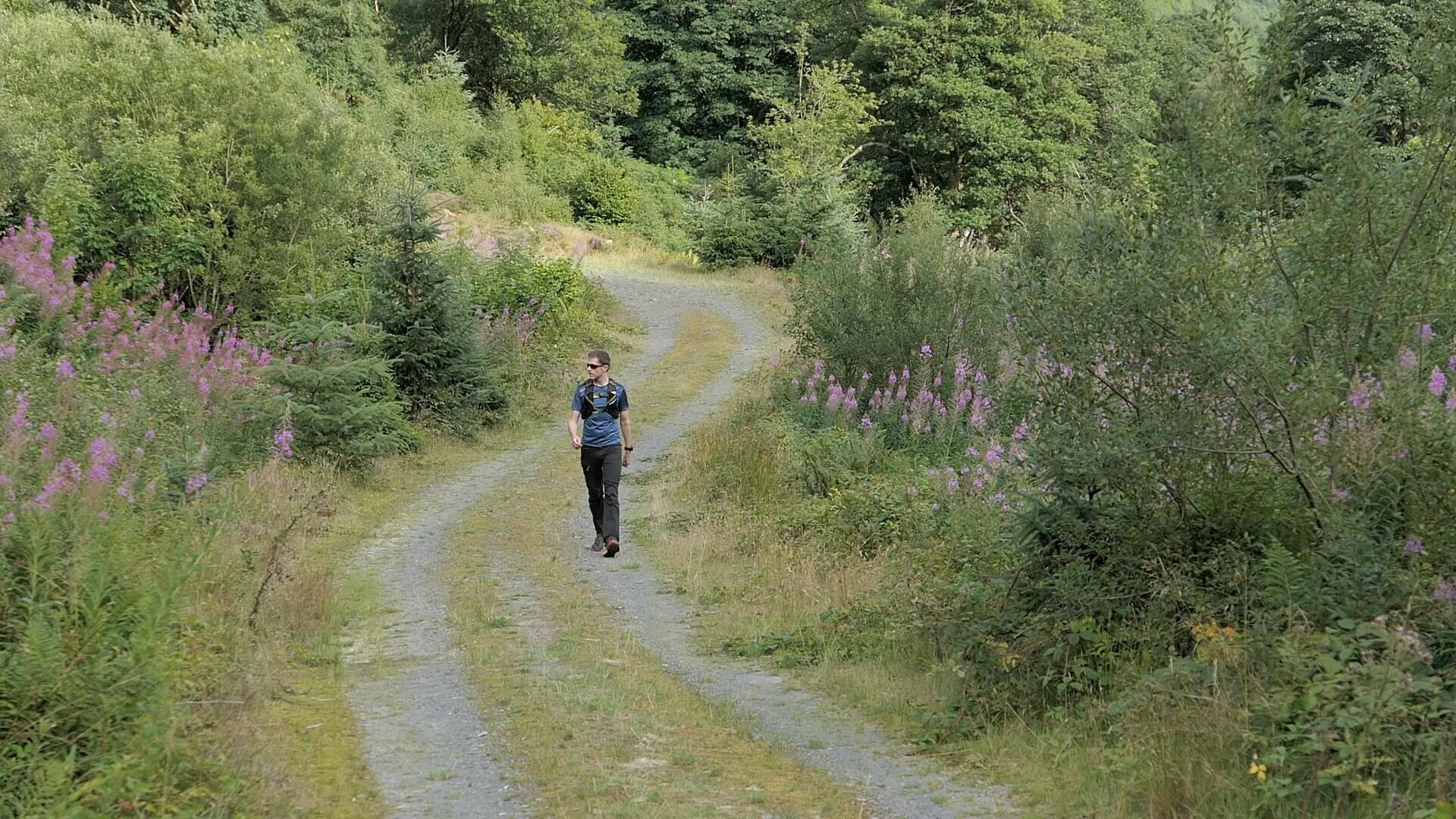
At Sport Walk, we’ve written and talked extensively about how to get started and progress with Sport Walking (sorry if we’ve bored you). We’ve released courses, made videos and posted on social until we’re blue in the face but we understand that structured explanations can be a bit off-putting for anyone who’s curious but not yet committed.
So in order to counter this and help anyone tempted to try Sport Walking give it a go or to give existing Sport Walkers guidance so they can encourage friends or colleagues to try it, here’s our guide to self-starter Sport Walking experiences.
The first thing to say is that for this kind of introduction to Sport Walking – where people just go out and give it a go without being shown the ropes by someone – is that the only ‘must dos’ are to walk faster than you would normally and to challenge yourself in some way. Now neither of these need to be overtly difficult or off-putting but in order for a Sport Walk to be a Sport Walk, you do need to be making an effort and getting out of your comfort zone a little.

It’s highly likely that many people who may be drawn to having a go at Sport Walking, have already challenged themselves in some way previously on a walk – perhaps climbing a mountain on holiday or exploring new places at the weekend. It could also be that they’ve tried pushing the pace a bit when out walking, perhaps dropping in on their local Park Run to tag along with the Park Walk and see what that’s like, so this doesn’t necessarily have to be completely new ground for people.
But the real key to self-starter Sport Walking experiences being successful and giving people positive experiences that they want to repeat, is just about going walking in beautiful, inspiring locations and combining this fulfilling experience with a bit of a workout. And at the end of the day, that’s what most Sport Walkers are looking for in their day to day Sport Walks too. They may take on challenges, covering big distances but the fundamental driver is to be out on the trail, in nature, walking strongly, so it’s quite easy really, to replicate what a committed Sport Walker might do in order to have a taste and see if it might be for you.
Location, Location, Location
Top of the list for getting a taste for Sport Walking is to seek out some trails in an inspiring location – preferably somewhere you don’t go to regularly or haven’t been to before. If you can try out the Sport Walking approach in a completely new location, it’ll enhance your experience and make the impact of your walk more powerful. Yes, you’ll have a good workout but you’ll also remember that feeling when you walk along a new trail and see what’s round the next corner and the two combined will make you want to go again.

You’ll want to relive that feeling when you’re walking fast, walking strongly and feeling that you’re getting a good workout but then you’ll also want more of that uplifting sense of discovery and freedom that you get out on new trails. It’s a heady combination, mixing a fitness workout with exploration and it’ll leave you wanting more!
Don’t stress about speed
For taster experiences, it’s best not to think too much about your pace and whether it’s good for a Sport Walker, just focus on walking faster than you would normally. It may be hard to judge how fast is too fast initially but the best rule of thumb is to hold a bit in reserve and then to increase your speed as you go along, if it starts to feel a bit easy.
It can take some time to judge your pace right and it’s always better to start off cautiously and then to pick the pace up rather than heading out all guns blazing, only to hit the wall after a couple of kilometres. This is a taster experience – an opportunity for you to try Sport Walking, to get a feel for what it’s like but trying to walk like an experienced Sport Walker isn’t going to give you that experience!

You see, to get the best idea of what Sport Walking is like, you need to walk at a pace that will replicate what an experienced Sport Walker would feel when they’re walking strongly. The simple fact is that they’ll be walking much faster than you might be able to cope with but it will feel quite comfortable for them. So you need to walk at a raised pace that still allows you to feel comfortable. This is not about jumping straight in with training to improve your fitness, it’s about you experiencing what it’s like on a Sport Walk and that means being comfortable with your pace for the majority of the time.
That’s far enough
Distance is another aspect to get right. If you jump straight in with a half marathon Sport Walk but aren’t used to those sort of distances, it could be the only Sport Walk you ever do, if it was a lot harder than you expected.
It’s far better to finish wanting more because that’s what spurs you on to keep going. Remember, this is about having a positive experience with your first taste of Sport Walking – there’s plenty of time to build up your capability to go long if you decide it is something you enjoy.
So pick a route that’s going to be achievable for you. Somewhere between 10 -15km is a good distance for your first Sport Walk but if you’re at a really early stage then just go for as long as you can manage. If you’re not right at the beginning of a fitness journey and have some potential in you already, then 15km is a really great distance for a first taste.

15km is a good workout for an experienced Sport Walker, so you won’t just be tickling the edges here, you’ll be doing a proper Sport Walk but it’s not so long that you’re going to suffer as a result. Anything less than 10-15km for someone with a reasonable amount of fitness isn’t really going to test them enough to feel that they’ve done something significant.
This is, really, a bit like Goldilocks and the Three Bears! Not too short, not too long…… just right! An experienced Sport Walker will walk 15km in a little over two hours and for someone having a taste of Sport Walking, it’s important to be walking strongly for at least two hours, to get an accurate idea of what Sport Walking for longer periods might feel like.
Go all in on your surroundings
While pace and distance do matter, the most important thing is to immerse yourself in the landscape you’re travelling through, to soak up the nature, the open space, the fresh air and to consider how good it is to be working out on a trail in the middle of an inspiring landscape, rather than pounding a treadmill in an air-conditioned box.
It’s the landscape that sustains you, makes you want to press on and see what’s over the next hill or through the next woodland. The views you get when you scale a hill or the sense of calm you have when the trail snakes through mature trees – this is what you’re looking for. Yes, having a good workout is important but it’s the environment and the landscape that really feeds you, so soak it all up.
Challenge parameters
The other thing to focus on, even though this is a first time Sport Walk, is to create some kind of challenge element for the walk. It could be that you try to walk the route in a particular time, it could be that you set yourself a goal to walk at a certain pace. Whatever it is, inject some challenge into the walk, on top of the distance you’re walking and the fact that you’re simply walking faster than normal and you’ll get the most accurate experience of Sport Walking.
You want to feel like there’s purpose to what you’re doing, you’re not just going out to feel what it’s like to walk fast on trails. This purpose is deeply connected to Sport Walking in general – we walk to achieve something, so building this into a taster walk is going to add to the experience.
At the end of the day though, to get a taste of Sport Walking, it’s important to feel that you can do it in the way you want, as long as you walk fast and push yourself in some way of course (so it’s not just a walk). All these ideas can help but, equally, you just need to go out for a walk and make it count!
Leave a Reply