
Insight
By Roger Burlinson
The term ‘tough love’ is usually used to describe disciplining someone for their own benefit and, as a result, it’s almost always projected onto another person. But flipping the spotlight round and delivering a little ‘tough love’ to ourselves is really valuable and becomes essential when pursuing a challenge goal.
Being accountable to yourself for you own actions may sound like a bit of an old fashioned attitude but in Sport Walking it’s as vital as the shoes you wear or the fluids you drink. You see accountability is essentially about honesty and if you’re not honest with yourself then you’re setting yourself up to fail.

Consider Sport Walking for fitness. If you’re not honest with yourself about the work you do or the progress you’re making or not making, you’re only fooling yourself. Getting fit is difficult and there’s only one way to get there – to be completely real about your potential and dedicated to the work you need to do. If you don’t approach the task with honesty and if you’re not accountable to yourself for your actions, then you won’t make progress.
It’s the same with challenge focused Sport Walkers. In fact, it’s quite possibly even more important for Sport Walkers pursuing a challenge goal to be accountable to themselves because there’s more at stake. There’s all the training you need to do – necessary to even finish the challenge. Then there’s the goal that’s been set – you either achieve it or you don’t, there’s no middle ground. Weather plays a factor, as does nutrition and hydration, all of which require positive action where, again, there’s no real scope to ‘fake it ’til you make it’.
No my friends, being accountable in Sport Walking is arguably one of the most important attributes to adopt. It’s not because we’re trying to uphold fairness in sport or projecting a certain type of conduct, far from it. Accountability is like the fuel in a racing car, without it you’re going nowhere.
But while it’s easy to think of accountability in negative terms – “I messed up but I admitted it to myself” – it’s best to view it on wholly positive terms. When you’re accountable to yourself for your actions, you’re enabling progress.
If you didn’t do what you planned and acknowledge it, you have an opportunity to improve next time. If you pretend to yourself that something or someone else is responsible for you not doing what you planned, then you’re denying yourself that progress. You can’t improve if you don’t acknowledge that something needs improvement.
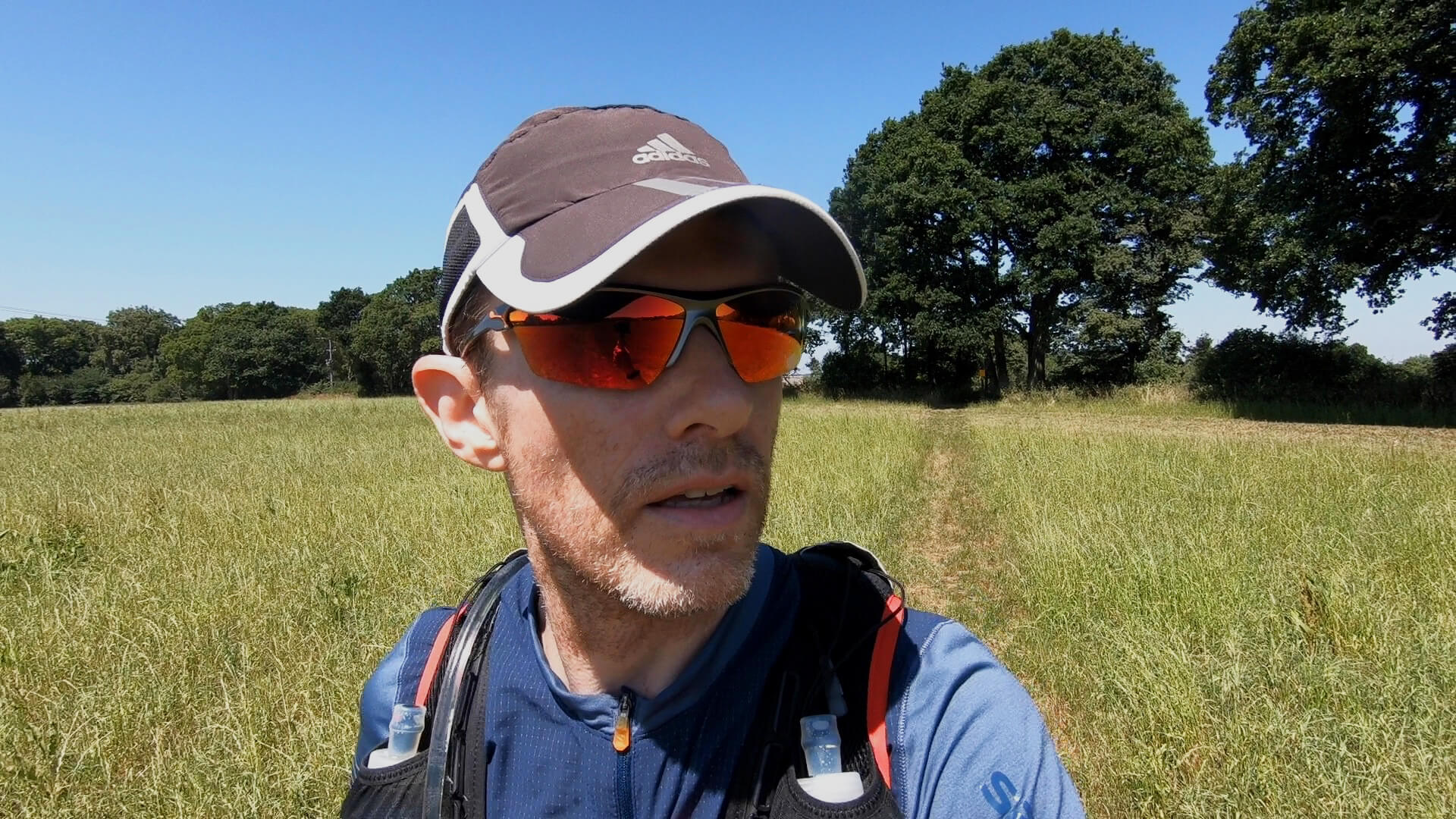
The best example I can give about my own accountability (or lack of it in the moment) was when I took on the Avon Valley Path, attempting to set a Trail Record. The trail is about 56km long, so it’s not one of the longest way marked routes and it is roughly broken into two core sections – Salisbury to Ringwood and then Ringwood to Christchurch.

This is a really nice trail and I’d set my sights on a fast time. On the day, temperatures soared and the dry conditions made it really hot, so much so that I had to stop whenever the path connected with the river Avon, to soak a headband in river water to cool me down.
As I approached Ringwood and a planned support stop to take on fresh supplies for the stretch down to Christchurch, I became more and more convinced that I needed to stop. I told myself this was about safety, about the risk of heat stroke and that I was doing the right thing. A bit like mountaineers turning round on a climb because the conditions become dangerous.
The heat was getting quite a lot to bear and all I kept thinking of was how nice it would feel to sit in an air conditioned car! This should have been a warning sign – that I wasn’t really being honest with myself – but I upheld my health and safety stance and abandoned.
Almost as soon as I got in the car though, I started to feel guilty. I’d convinced myself that I was taking a sensible decision to stop given the heat but I had plenty of electrolytes and food, I was dressed appropriately for hot weather and there was no real reason to suspect the second phase would be as hard as the first phase. The truth is my heart wasn’t in it and I decided to quit. The pretence I’d held in the approach to Ringwood soon melted away when I actually sat in our air conditioned car!
Now there’s nothing wrong with quitting a challenge, in fact it’s a skill to be able to know that you should stop if the conditions are getting too much for you. Being safe is always the most important option but for me, on that day, I’d just had enough and bailed. Had temperatures been hotter and I’d perhaps struggled to get enough fluids, then my decision would have been absolutely on point but although it was hot, it wasn’t dangerous and I had plenty of fluids. I’d simply run out of motivation.
The lesson here is that my sense of guilt was my accountability kicking in. I knew, almost as soon as the engine started and we pulled out of the car park that I’d just bottled it. I quit because it was what I wanted to do not because I needed to.

So, on that day, I wasn’t prevented from achieving my goal because of the weather or because I was ill or injured. On that day, I chose not to achieve my goal.
But the really important thing is that I knew it and I felt guilty because of it. My guilt wasn’t because I’d let anyone else down, it was because I’d let myself down but my accountability to myself for this failing, while important, isn’t the most significant element. It’s that I acknowledged the exact cause and took ownership of it.
By doing this, I set myself up to succeed in the future because I had clear sight of a weak point – quitting this trail in hot conditions was a benchmark and I could now ensure that I avoided that same mindset in the future because I knew it was self inflicted.
So how should you approach accountability and avoid needing to give yourself tough love? Well, it’s pretty easy really once you accept the value and importance of it. Just make sure that in everything you do, you acknowledge the reality of your actions.
If you struggle and quit at any time and for any reason, that’s OK, as long as you’re honest with yourself and acknowledge the reason why you quit. If you just lacked willpower, then you know what happened and you can begin to understand why that was and make a change to strengthen your willpower.
Quitting itself is not a problem. Quitting but blaming something or someone when really it was just you having a moment, is a problem. Failure is only failure if you delude yourself about why you failed. In every other circumstance, you can learn from it and grow to become better.
If you have a setback or aren’t able to hit a target you’ve set yourself, look inside to discover the cause and then, simply, resolve to try again. Nothing of any value in life comes easy. Everything that’s worth something is hard and, after all, we’re only human!
We make mistakes, we’re fallible and becoming strong is a process that’s littered with failure. So don’t fear failure, don’t fear quitting, fear lacking accountability. It’s all the motivation you need!
Leave a Reply