
Sport Walk’s Founder – Roger Burlinson discusses a phenomenon that can sneak up on you & negatively affect you when you’re taking on a major challenge – Halfway Point Blues
By Roger Burlinson
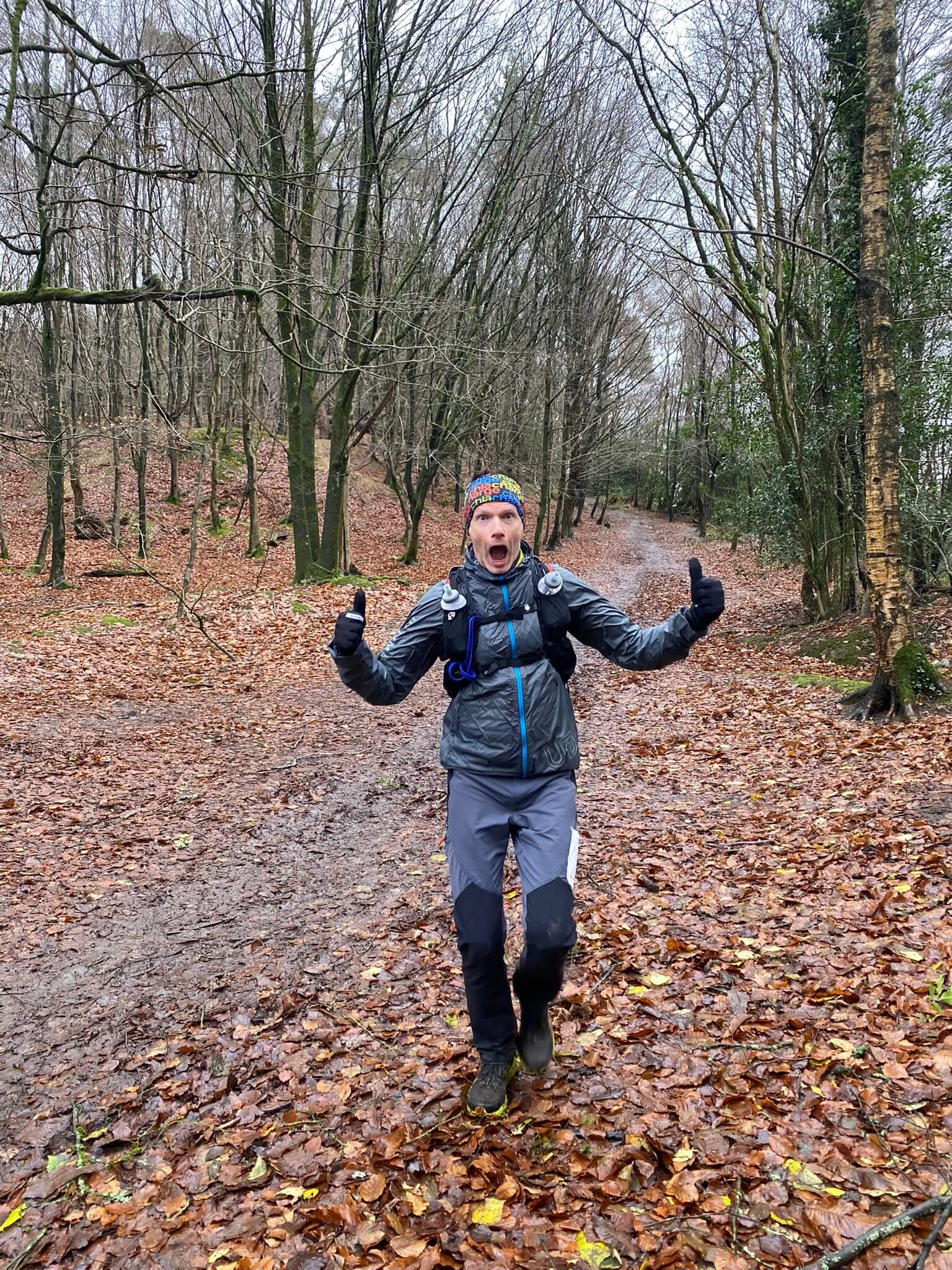
In December I took on my first ultra challenge in four long years – Hurtwood 50k. If you’ve read my write up on it I’ll spare you the gory details but let’s just say it was a tough one. The reason I mention this though is that there is this phenomenon that all endurance athletes (that means you too) face – reaching the half way point and having a minor crisis.
Thankfully, at Hurtwood, I didn’t experience this but I did, briefly experience the precursor, which can lead to crisis if you don’t nip it in the bud, so I want to share this phenomenon with you, so you can avoid it too when it heads your way.
Put simply, Halfway Point Blues are when you reach half distance in a challenge, especially a long one, are instantly thrilled to be at this point but then, almost as quickly, sink into mild despair because you realise you’ve got to do the same distance all over again!

Until you’ve experienced it, it’s hard to imagine that this is a particularly debilitating occurrence but debilitating it can be. I don’t mean frozen to the spot type fear, but more the ‘woodpecker of doubt’ attaching itself firmly to your head.
The reason this matters is that the middle third of a challenge often determines how you perform in the last third. If you’re in good shape, feel happy and are pushing on positively, then when you hit the last third, which invariably brings fatigue to bear on you, you can generally keep it together to get home, close to your target time, if you’ve not been able to hold your pace.
But if you’re in a bad place in the middle of a challenge, it’s much, much harder to pull yourself back up to your happy place, when everything’s just getting harder and harder. The downward spiral of tiredness, doubt and a leaking self confidence can make it really hard to keep going at all, let alone at your target pace to achieve your goal.
So what’s to do? Well, the first thing is to understand that this thing exists and to be aware of it because then, if you start having negative thoughts at this point you can go “aha! I see you”, although if you’re in a challenge, it’s probably best if you do this silently in your head, not out loud!

Acknowledging the existence of something difficult is always the first and most important step to be able to cope with it, whether it’s something tangible like bad weather or something psychological. Psychological challenges are always more difficult to bat away because they don’t manifest themselves physically. You can’t see ‘Halfway Point Blues’ approaching. There won’t be a sign after the feed station saying ‘Halfway Point Blues in 10km’!
So we have to educate ourselves about things that can derail us and then understand how we can overcome them. Some things you have to figure out for yourself but this one, I can help you with.
This might sound ridiculously simple but the best way to protect you from this pernicious little phenomenon is to work on priming yourself to always think how far you are from the finish, not from the start. That way, you’re always counting down, you’re always getting closer and closer to the end – even in the first kilometre.
As I said, this might sound really much too easy for it to work but it’s not if you think about it. If you’re in, say, a 50k challenge and you reach the 20km mark, if you think of this as being 30km from home, then when you reach the half way point, you’re then only 25km from home and when you reach 26km, you’re 24km from home and so on.
You may still have a brief moment where you think about how you feel physically but because you’ve implemented a process for marking distance that’s all about decreasing numbers, it’s much easier to snap out of any negative thoughts and to refocus on your countdown.
The other thing you can do is to plan some kind of reward to accompany reaching ‘25k from the finish’. Some kind of distraction right at that point, so that if you do have a wobble, you can turn your thoughts to something good and that’s just enough to bring you back round.

Mind games are such a big factor in any endurance challenge and the key is to play to win them. So, whatever strategy works for you, figure it out in advance, practice it when you train and then build in an extra layer of defence in the form of some kind of reward or distraction, to help you manage it in the moment and you stand the best chance of keeping dark thoughts at bay.
Leave a Reply