
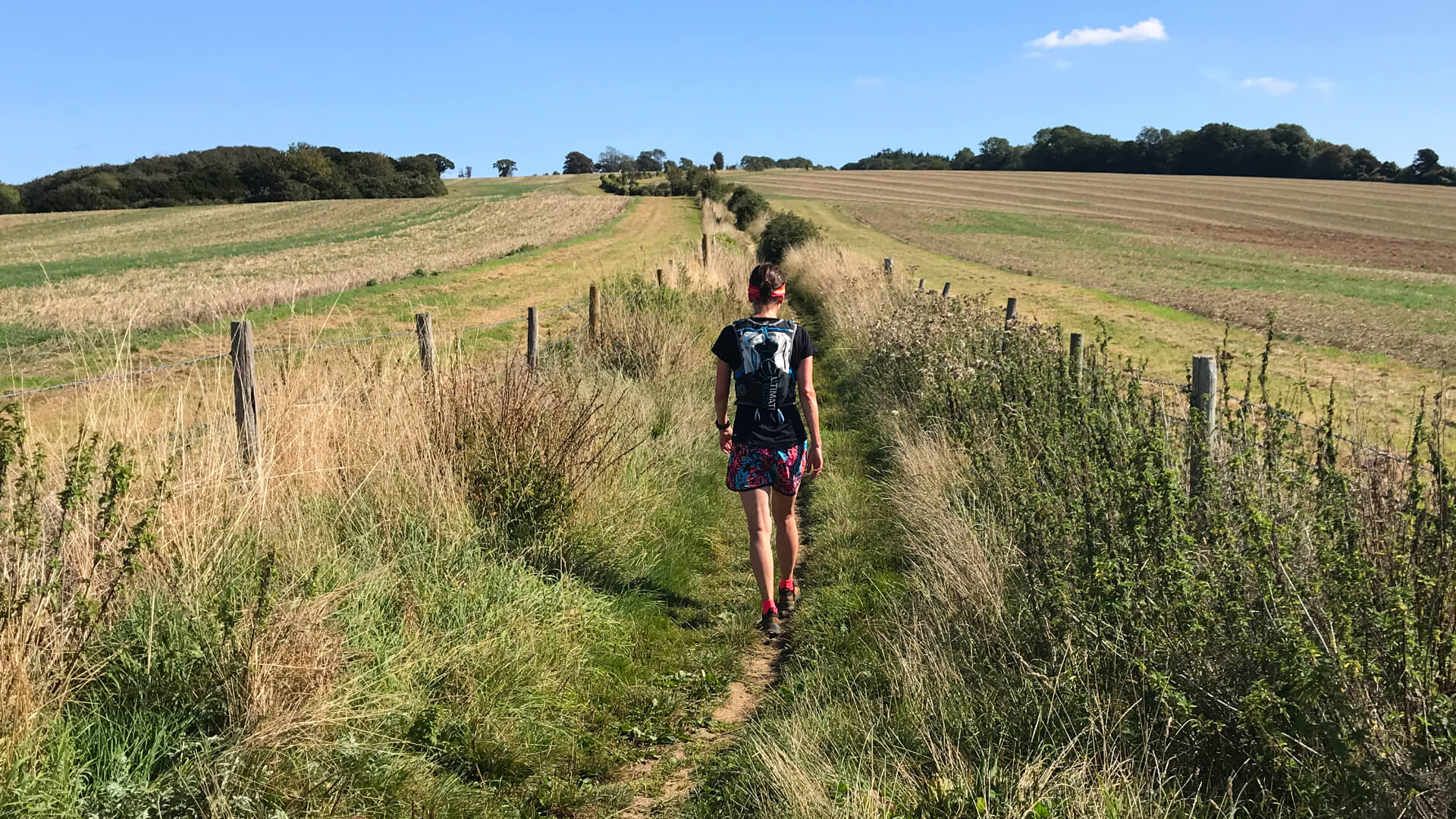
If you’re a rock climber or mountaineer, you’re no doubt very familiar with the term ‘on sighting’. It refers to completing a full route for the very first time, on sight, without previously having completed sections of it in preparation or as a part of another route and it’s a really great approach that you can take in Sport Walking too.
You can ‘on sight’ a challenge route, to add an extra dimension to the test – you’re having to navigate and deal with whatever you encounter along the way, as a part of your challenge. There’s no walking sections to understand what you’re going to face, you go into the challenge itself completely blind and then you have to cope with any issues, as you encounter them.
While aiming for a time goal on a route you know and have walked before is really fulfilling, adding an ‘on sighting’ dimension to it really ramps up the sense of adventure. You have no idea what you’re going to face and that’s over and above the physical and mental tests a Sport Walking challenge can lay upon you.

You may have looked at the map and followed the route with your finger, so you are aware of what you’re likely to face, in terms of climbs, descents, any obstacles or waterways you’ll need to negotiate etc but you’ve not previously set foot on that trail or have any on the ground knowledge of how the route will present itself and that’s where the buzz comes from.
Navigation, navigation, navigation!
The key thing when ‘on sighting’ a Sport Walking route is navigation – either relying on way markers on the ground (if you’re sure they are all in place and cover every possible junction) or following on a map. If you have mapping software like OS Maps, you might plot the route and follow it on your phone or navigation device, which removes some of the peril but you’ll still have to deal with any route discrepancies on the ground or even trail diversions you may not have heard about. The map can only guide your progress, you still have to deal with what’s going on at trail level as you encounter it.

A good example of this was when Roger tried to set a Trail Record for the Clarendon Way. He’d previously walked sections of it but there was one clear cut segment that he didn’t bother with because it was along a road and was fairly close to the end.
On his attempt though he encountered way markers that pointed in a different direction to the main mapped route. He also discovered that the downloaded version of the map on his phone matched this route, so he followed it. It transpired that this route was incorrect and so he diverted off trail and his attempt therefore failed, despite him finishing in a pretty strong time.

On this occasion, the issue was caused by a mapping discrepancy but because he hadn’t walked that section previously he was having to deal with what he found, as he found it. Without the incorrect downloaded map seemingly supporting the way markers, Roger would have just followed the map, stayed on route and had a valid time.
So it’s this element of ‘on sighting’ that really adds both peril and excitement to the challenge. It’s not simply a question of following a clear route and going as fast as you can. You have to be forever vigilant because you’re learning the trail as you go.

Adding adventure
‘On sighting’ gives you a real sense of adventure and discovery, walking a trail for the first time and figuring out which way to go, as you go. If you’re using this approach as extra spice for a challenge, rather than simply applying if to an adventurous weekend Sport Walk, then you’ll also have the additional impetus of time management – you can’t afford to ponder the trail options in front of you for too long, you need to press on to hit your time goal, so you need to make quick decisions.
The key to successful ‘on sighting’, whether it’s for a challenge or just for a ‘Weekend Warrior’s Sport Walk, is to always be ahead of the trail in front of you. What do we mean by this? Well, it’s about being attuned to what’s coming even if you can’t see it yet. If you’re following a plotted map route for instance, don’t just wait until you encounter a junction to check your directions, look on the map as you walk to see what’s coming, so you can be prepared and then just quickly double check any signs on the ground and take the right turning.
The beauty of all this is that you’re flying completely blind. You have no way of knowing if the trail ahead is in perfect condition or is blocked by a fallen tree. Has the trail been well maintained or is it overgrown? This is about surrendering to chance but, more importantly, being ready and prepared to cope and adapt with whatever you find.
And this isn’t just good to inject a little excitement into your weekend walk or a challenge, ‘on sighting’ builds resilience in you generally and turns you into a ‘ready for anything’ Sport Walker. So many things can go wrong on a Sport Walk and being able to to cope with them and figure out a way to get yourself back on track is really valuable.
The best way to try it and get started, is to go walking sections of major long distance way marked trails, that have other trails crossing them at fairly frequent intervals. Use this experience on relatively benign routes to hone your skills and then when you’re ready, pick a complete route and go for it!
Leave a Reply