
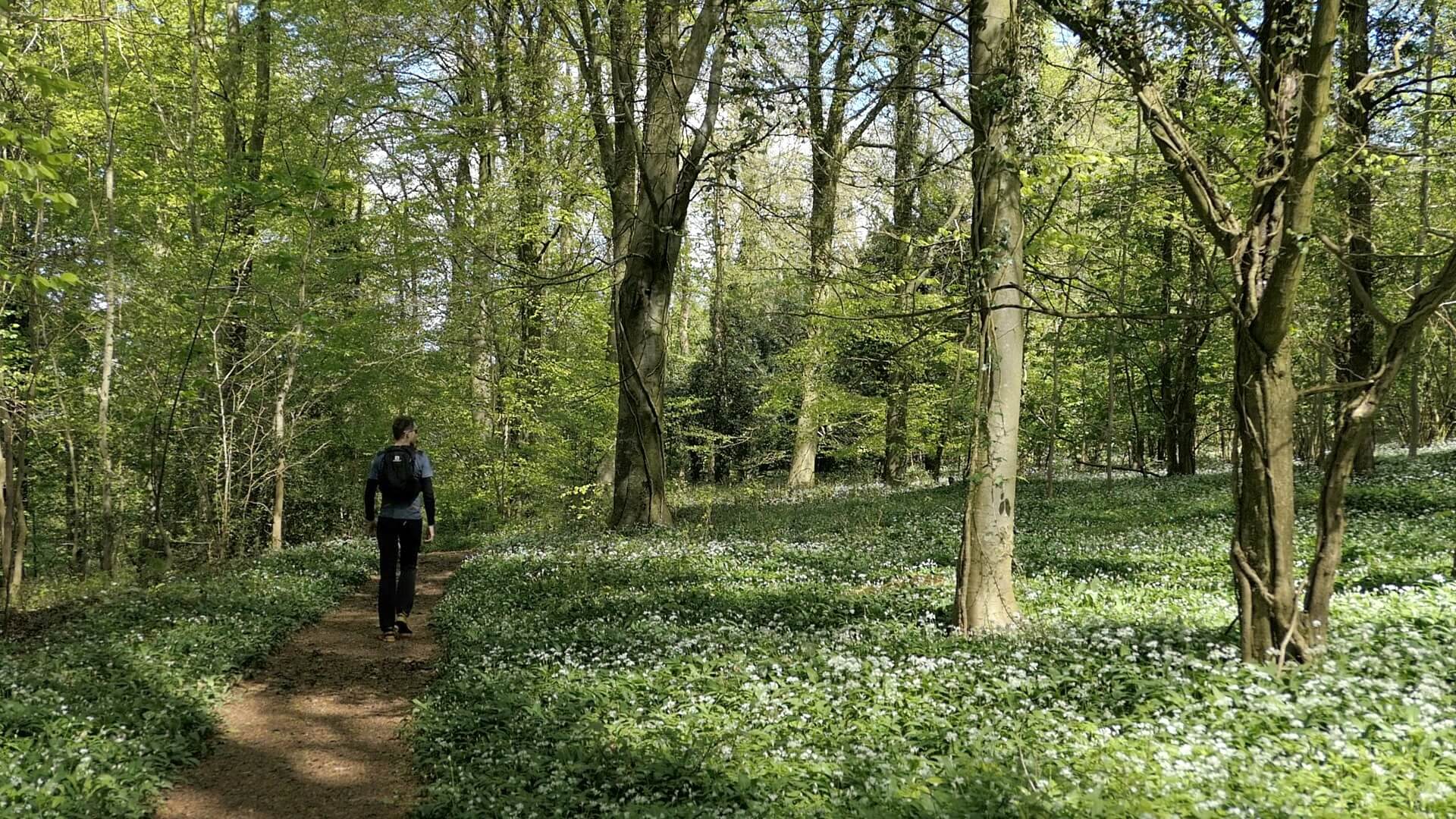
The arrival of spring signifies a time when we all become obsessed with sorting things out, with cleaning, preparing and making change. It’s such a clearly defined time, visually, that this new beginning feels really obvious, rather like the turn of the year. Leaves start to break out from the skeletal branches of the trees, flowers start to appear everywhere and, of course, the days become significantly longer (unless you live on the Equator).
It’s impossible to overlook the arrival of spring and because it means that we’re moving out of a ‘standstill’ period, where it’s all about getting through those dark cold months, it feels somehow right that we should become more industrious. We know that long warm days are approaching and we feel compelled to get ready!
And so it goes with Sport Walking. Winter is a time for just getting on with laying the foundation for potential summer challenges and adventures. A time simply to go out walking strongly, without any real focus on any particular training need but to just accrue mileage and build your base.

Even when Sport Walking just for fitness, the winter time can be really positive – it can be a more relaxed freestyle period, although, you can just keep pushing hard all year round if you wish. Periodisation is a useful approach whatever your objective and for fitness, the winter is an opportunity to consolidate, to establish a new routine or to build habit, without any real pressure.
So by the time we emerge into springtime, we’re ready for change and, to a certain extent, we need it, in order to stay motivated. Repetition is your biggest enemy because it sows the seed of boredom, so embracing the opportunity to change is really valuable, especially for Sport Walkers.
And so comes, what we at Sport Walk call ‘The Spring Transition’. Now, the Spring Transition serves two key purposes – it’s a time to switch your approach to, and location of, training and it’s also a time to maximise your connection to the natural landscape and to nature as it changes, in order to fill your tank.
Training
First up, your training approach and location. Now this presumes that you’ve been training through winter, building your endurance base in preparation for a summer challenge but it could apply just as well to someone following this rough approach to Sport Walking in general – going unstructured through winter and then taking a more focused approach to Sport Walking in the summer because there’s more opportunity for adventure and challenge.

If you’re following a training or challenge preparation plan, then the arrival of spring signifies a time to change tack. The spring is effectively your final quarter of training or preparation before the summer and so this is a period that should be full of challenge replicating walks on terrain that tests you and really builds your capability ahead of your challenge. You want to be walking every week on trails that give you a strong physical test, so that you’re building on that winter walking and getting faster and stronger.
The other reason for migrating onto this type of terrain is to replicate roughly what you’ll experience in the challenge itself or to walk on terrain that’s more difficult, so that come the challenge, you’re in even better shape. If it’s a challenge in a mountainous region for instance, you want to be training regularly in mountainous regions or at least something that can replicate that environment and terrain from spring onwards. If your challenge is in a lowland region though, you want to be training somewhere with more hills and tougher trails, simply to build a capability that will see you sail round your challenge route with ease.
Distance is another important factor connected to the terrain type. This is a period where you want to be walking longer distances on your weekend training walks and so seeking out more substantial trails in more testing environments often opens up the potential to build these more substantial distances without repetition.
You can hook up with National Trails or long distance routes and they’re very likely to be testing walks because of that, so you’re getting a double benefit – the terrain is more challenging and there’s greater scope to build distance all in one package.

Of course, while both these elements benefit a challenge focused Sport Walker, those predominantly concerned with fitness can still follow these same principles and the change of scenery and more testing terrain will simply provide a more fulfilling experience, helping to maintain motivation.
Connection
The second key purpose of the Spring Transition is to maximise your connection to the trail, to the landscape and to nature and this is important not because it’ll give you some physical advantage but because it feeds you. Staying motivated in any sport or activity is vital in order to get the most out of it, so really taking advantage of the seasonal change to press the reset button and get a fresh perspective is really valuable, even if you’re only Sport Walking for fitness.
Think of it like surfing. You’re sat there, bobbing up and down on the water, squinting in search of rollers heading towards you. Then, you spot one and you turn, getting into position ready to ride that wave for all its worth. It’s the same with spring and the Spring Transition.
Spring arrives and you want to ride that wave of natural beauty, extended daylight and warmer air to give you a boost that can carry you forward. There’s so much added value in spring that simply walking your regular trails can feel like you’re in a different place, so capture that feeling and use it to drive and motivate you.
Switch from being in a relaxed freestyle state about your Sport Walking to planning and structuring your walks to give you the very best that spring where you live has to offer and then just max out on it.
Switch to walking predominantly on trails if you can and go where there’s real visual value from the springtime growth. Maybe there’s a Rhododendron wood near you, perhaps cherry trees or woodland full of Bluebells. Get up high and feel that warmer air lift your mood.
None of these things really have a tangible effect on your walking performance or your strength and nor will they make you faster or more resilient but they absolutely do bring performance benefits because they relax you and enhance your mood, so you’ll find you’re performing better without really trying.
The Spring Transition is incredibly valuable for your motivation as a Sport Walker. If you’re in training, moving onto more testing ground will bring tangible physical benefits but it’s both elements together that really make it something special.
Essentially, it’s about making the most of this wonderful time, to enhance an increase in training load. Sounds simple doesn’t it? There are so many ways in which you can do this but as long as you’re switching to tougher terrain for your walking and making sure also that this terrain feeds you psychologically, then you’ll always get the most out of it.
Leave a Reply